A roof turbine can spin visibly while removing very little air from a shed. By checking the building’s pressure balance, replacement-air openings, site exposure, installation details and supplier data, you can identify whether weak turbo ventilator fan airflow in Khed comes from the product, the building or the layout.
Key takeaways
- A spinning turbine does not confirm useful exhaust airflow.
- Calculate required air changes before choosing ventilator quantity.
- Provide low-level replacement-air openings for exhaust to work.
- Reject layouts without airflow assumptions, roof plans and installation checks.
Why a spinning turbine can still deliver weak exhaust
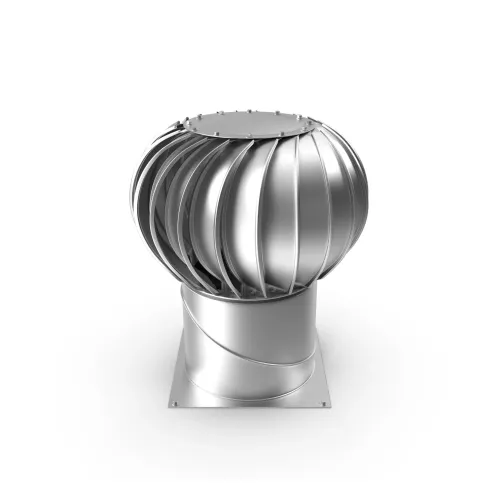
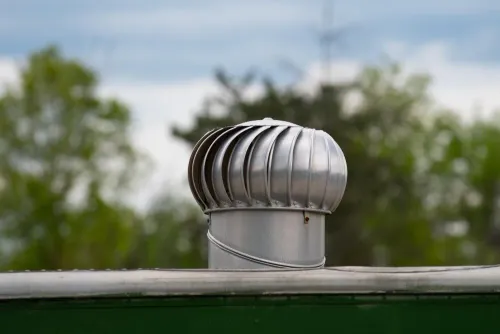
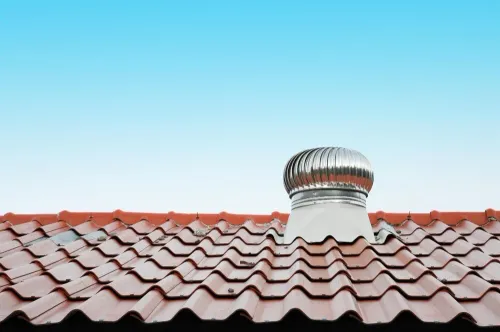
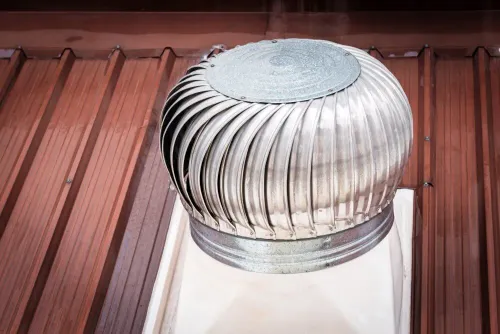
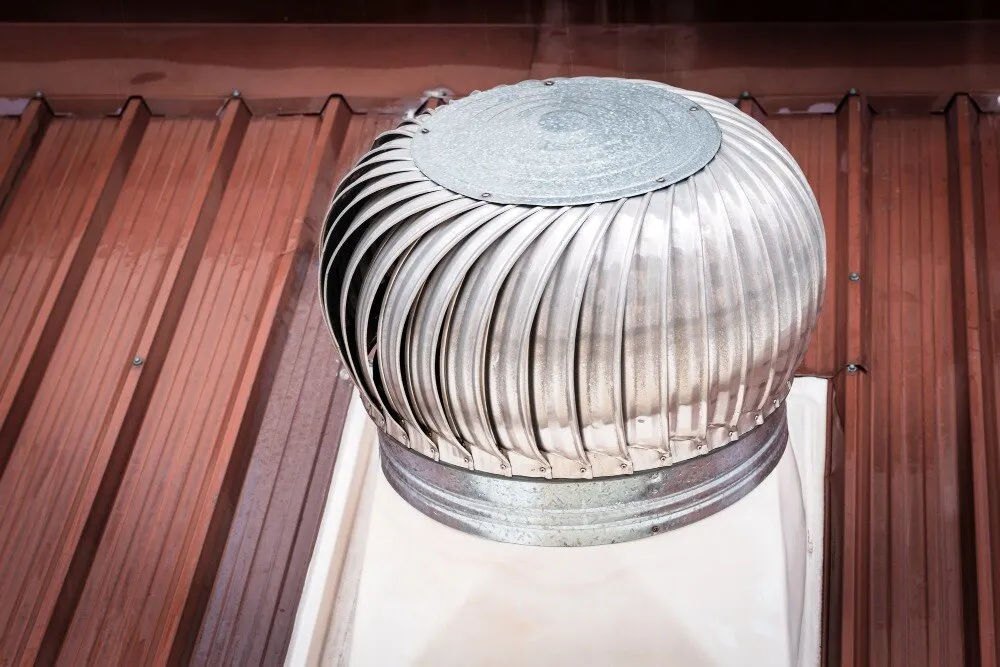
A spinning turbine does not prove that building air is leaving at a useful rate. A turbo ventilator fan is a wind-assisted natural exhaust device, so turbo ventilator fan airflow Khed depends on wind speed, direction, roof pressure and open replacement-air paths.
Low wind, wind shadow from nearby sheds, parapets, trees or hills, and a sheltered industrial plot can leave the throat with too little pressure to move indoor air.
| System | Airflow basis | What limits performance |
|---|---|---|
| Wind-assisted turbine | Variable outdoor wind and roof pressure | Low wind, wind shadow, blocked inlets and pressure losses |
| Constant-volume mechanical fan | Motor-driven fan curve at a stated speed | Duct resistance, filters, louvers and available motor power |
| Free-air rating | Flow with little or no resistance | Not a prediction of installed exhaust |
| Flow under resistance | Flow at stated static pressure | The useful comparison for a restricted roof system |
The rotor may spin because a local air stream accelerates around the cap, while pressure at the throat remains too low to draw air from the shed. Treat rotation as a visual condition, not an airflow measurement. Ask for test wind speed, static pressure, net throat area, airflow units, uncertainty and the stated test method.
A catalogue figure is meaningless without them; two equal-diameter units can have different results because of throat area, blades, bearings, mesh and weather hoods. AMCA 210 provides a recognised laboratory method for fan aerodynamic performance, but its test result does not guarantee free-air or installed flow on your roof.
How to calculate the airflow the shed actually needs
Start with the shed’s volume, not the roof-sheet count or ventilator diameter. Calculate Q = building volume × ACH ÷ 3,600, then set the target from the process: a 10,000 m³ shed at 6 ACH requires 16.7 m³/s.
Compare that demand with the combined tested output of all ventilators at the site’s expected wind speed and static pressure.
| Item | Calculation | Result |
|---|---|---|
| Airflow demand | 10,000 × 6 ÷ 3,600 | 16.7 m³/s |
| Ventilator supply | Tested flow per unit × number of units | Compare with 16.7 m³/s |
| Shortfall | Demand − tested combined flow | Add capacity or improve airflow paths |
Replacement air sets the real limit. Use Q = Cd × A × √(2ΔP/ρ), where Cd is the discharge coefficient, A is the free inlet area, ΔP is available pressure and ρ is air density.
Closed doors, small louvers, insect screens and restricted wall inlets reduce A; the shed then develops negative pressure and starves the roof exhaust.
Stack pressure rarely rescues a low-rise shed. Using ΔP ≈ ρgH(Ti−To)/Ti, an 8 m effective height and 10 K temperature difference produce only about 3 Pa before duct, louver and opening losses. At 5 K, the figure is about 1.5 Pa.
Ask a turbo ventilator fan supplier in Pune for flow at your expected wind speed and pressure, not free-air flow alone. Also request the test method, net throat area and uncertainty before approving a turbo ventilator fan airflow Khed layout.
How the Khed site changes wind pressure and roof layout
Khed is not enough information for an airflow prediction: the name applies to locations in different districts, including Pune and Ratnagiri. Record the actual district, elevation, ridge height, roof slope, roof orientation and prevailing wind direction before comparing units.
A turbo ventilator fan trader in Khed who quotes only diameter and quantity has not completed the site assessment.
- Adjacent building height, parapets, trees and hills
- Sheltered plot conditions, nearby sheds and open replacement-air paths
- Furnace and process-line positions, crane travel, lights and roof trusses
| Position | Pressure pattern | Likely result |
|---|---|---|
| Windward ridge | Positive pressure | Exhaust weakens or reverses |
| Leeward ridge | Suction | Better draw, if openings are unobstructed |
| Separated-flow zone | Turbulent or fluctuating suction | Uneven exhaust and backflow |
Equal spacing along a ridge does not produce equal performance. One unit can sit in positive pressure while the next operates in suction or separated flow, so layout must follow wind exposure rather than roof geometry alone.
Place units above furnaces and process lines when the heat plume reaches them, but check cross-draughts, cranes, lights and trusses first. These obstacles can bend the plume away from the ventilator and leave the breathing zone hot.
Monsoon rain adds another restriction: operators close or throttle ventilation after leakage. Check roof pitch, sheet profile, curb flashing, drainage, fastener sealing and cap overlap against wind-driven rain. A spinning cap is not weatherproof without a correctly sized opening and properly detailed curb.
Which installation faults and checks reveal the real restriction
Inspect the installation before ordering larger fans. Watch the turbine under representative weather, not a calm morning: confirm smooth rotation, listen for bearing rumble, and check for drag, seized bearings, bent blades, a damaged cowl or a distorted weather hood.
- Measure the roof opening against the specified size.
- Look for a blocked throat, crushed duct transition, excessive sealant, distorted flashing and a sheet profile intruding into the inlet.
- Inside the shed, open every inlet louver, operate the doors, inspect bird mesh for blockage, and record temperature at floor, breathing-zone and roof levels.
- Trace smoke from the breathing zone toward the roof, then measure air velocity at representative inlets and outlets with an anemometer.
| Field finding | Likely restriction | Next check |
|---|---|---|
| Turbine spins but inlet velocity is low | Inadequate make-up air | Open doors or louvers briefly and repeat the reading |
| Outlet flow varies sharply by roof position | Poor placement or wind shadow | Compare units near parapets, sheds, trees or roof edges |
| Smoke stalls below the roof | Pressure loss or temperature stratification | Inspect mesh, hood, throat and internal obstructions |
| One unit drags or rattles | Bearing or blade damage | Isolate, repair or replace it before measuring airflow |
Smoke movement and measured flow outweigh visual rotation. If opening inlets improves readings, the ventilator is starved rather than undersized. A turbo ventilator fan manufacturer Pune quotation should therefore state net throat area and pressure-loss assumptions, not diameter alone.
What to demand from a Pune supplier before approving the layout
Approve a layout only after the quotation becomes a site-specific schedule, not a diameter-and-quantity promise. Use the same request for a turbo ventilator fan trader in Pune, turbo ventilator fan supplier in Pune or turbo ventilator fan manufacturer Pune.
- State the nominal outside diameter and net throat area, including losses from blades, bird mesh and rain hood.
- Provide tested airflow at stated wind speeds, static-pressure points, test method, airflow units and measurement uncertainty. Ask whether the test follows AMCA 210.
- Record starting wind speed, bearing arrangement, blade material and geometry, mesh aperture, rain-performance evidence, and material or coating.
- Show curb dimensions, flashing, fastener pattern, purlin connection, roof-support detail, warranty exclusions and proposed quantity.
| Proposal item | Require in the schedule | Reject or query |
|---|---|---|
| Airflow | Flow versus wind speed and static pressure | Free-air figure with no test condition |
| Installation | Curb and fasteners sized for uplift and vibration into purlins | Fixing that relies on unsupported roof sheets |
| Wind design | Site basic wind speed, exposure, roof-zone coefficients, edge and corner effects | Generic “Pune” design |
| Quantity | Calculation using net throat area and site conditions | Count selected from roof area alone |
Ask Hi Tech Patra Depo or another candidate for this schedule against the actual district, elevation, roof height and surrounding obstructions before approving the layout. Khed alone is ambiguous because the name covers locations in Pune and Ratnagiri districts.
Welding fumes, solvent vapour, dust, combustion products and guaranteed process capture require mechanical or validated hybrid ventilation; natural output changes with weather.
Related products
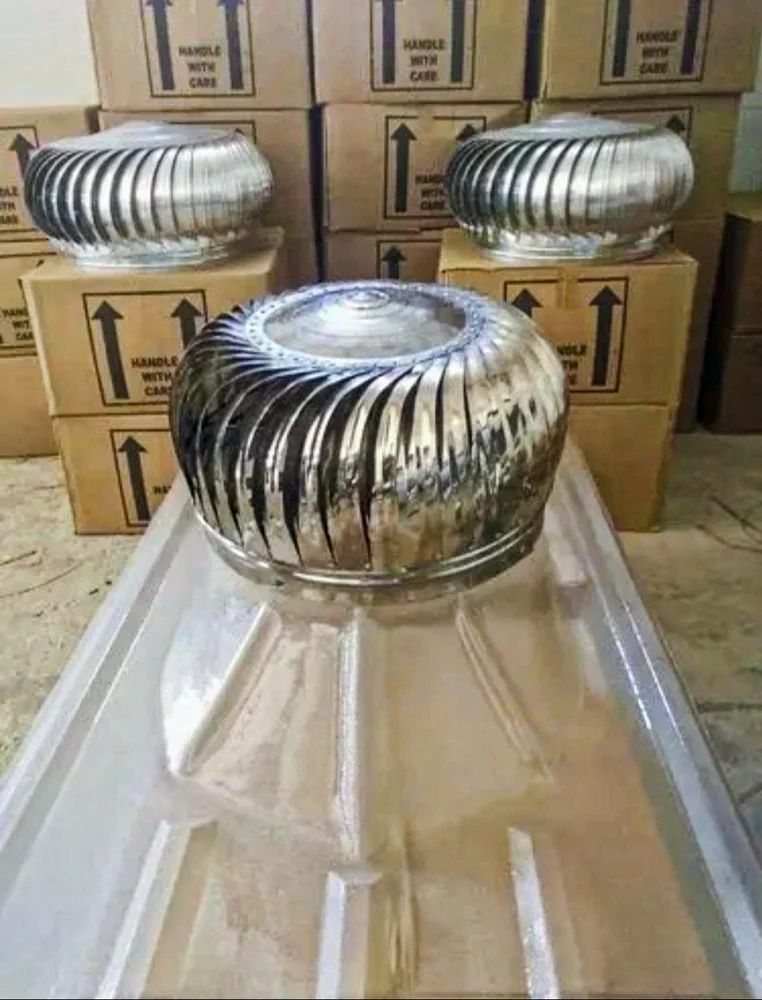 | Turbo Ventilator Fan Hi Tech Patra Depo – Leading Turbo Ventilator Fan Manufacturer, Supplier, Distributor, Dealers in Pune, Pimpri Chinchwad Hi Tech Patra Depo is a... View product → |
 | Turbine Ventilator Turbine Air Ventilator Manufacturer, Supplier, Distributor, Dealers, Trader In Pune, PCMC, Chakan, Talawade – Efficient & Energy Saving Ventilation... View product → |
Frequently asked questions
Why can a spinning turbo ventilator still deliver weak exhaust?
Wind-assisted exhaust depends on wind speed, wind direction, roof pressure and open paths for replacement air. A turbine can rotate while the shed lacks enough intake air or has excessive flow resistance.
How do you calculate the airflow a shed needs?
Calculate the shed volume by multiplying floor area by clear height, then multiply that volume by the required air changes per hour. Divide the result by 3,600 to convert cubic metres per hour into cubic metres per second.
How does a Khed site affect turbo ventilator performance?
Nearby buildings, hills, trees and roof orientation alter wind speed and pressure. Inspect prevailing wind exposure, ridge layout, roof slope and the position of intake openings before fixing ventilator locations.
Which installation faults restrict turbo ventilator airflow?
Check blocked or undersized intake openings, sealed eaves, obstructed throats, poor flashing, incorrect roof cut-outs, damaged bearings and ventilators placed outside the highest-pressure roof zone.
What should you demand from a Pune turbo ventilator supplier?
Request a roof plan showing ventilator spacing, airflow assumptions, throat and base dimensions, material specifications, intake-air requirements, fixing details, warranty terms and commissioning checks.
Related products
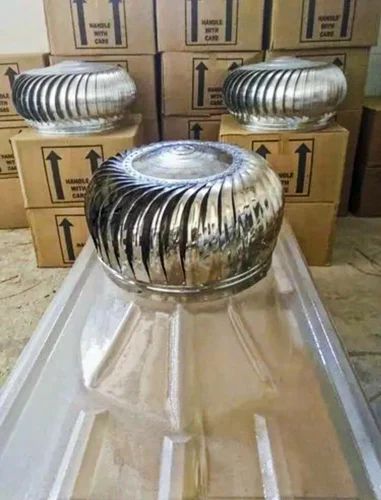 | Roof Turbo Ventilator Manufacturer, Supplier, Distributor, Dealers in Pune, Pimpri Chinchwad, Chakan, Talawade – Energy Efficient Ventilation Solutions Looking for a... View product → |
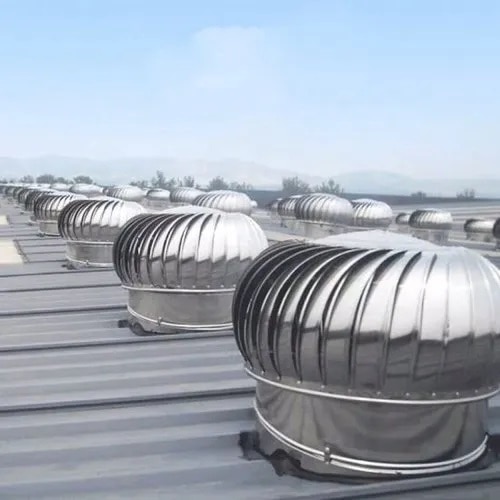 | Turbine Ventilator A turbine ventilator, also known as a turbo ventilator or wind-driven roof ventilator, is a rotating ventilation device installed on the roof of... View product → |
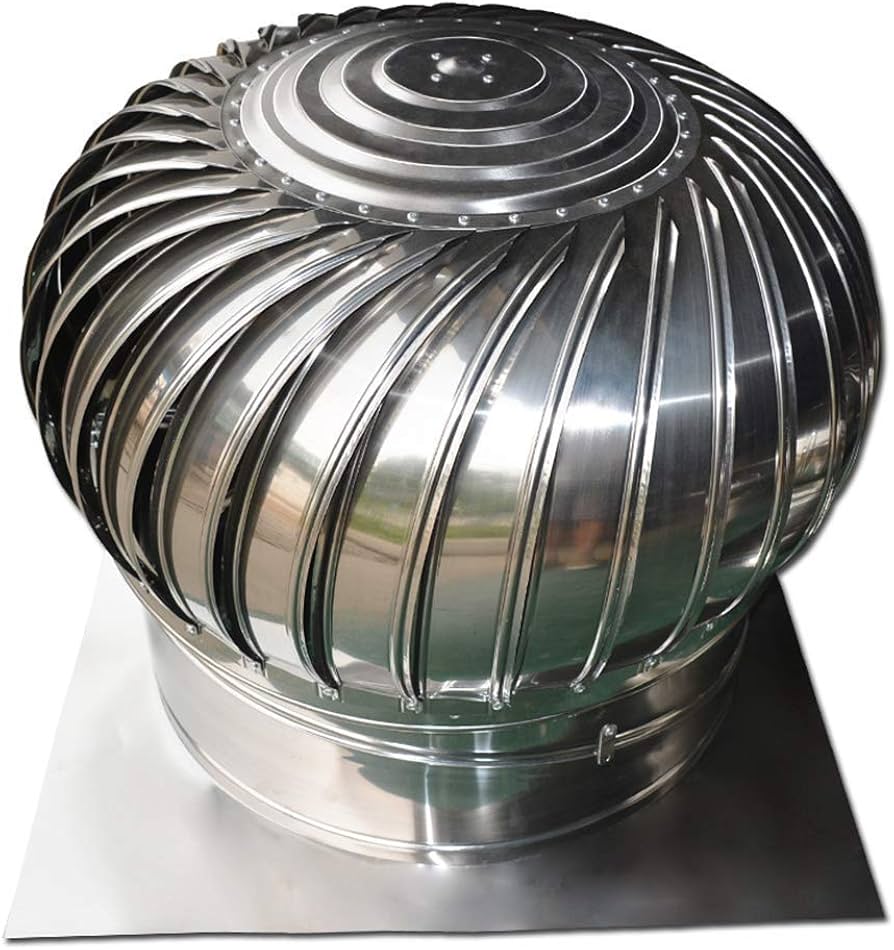 | Roofing Ventilator A roofing ventilator is a wind-driven ventilation system mounted on the roof sheet of industrial structures. View product → |
Keywords