A roof turbine is a weather-dependent exhaust device, not an air-conditioner, and its usefulness depends on heat load, building openings and roof design. By the end, you will be able to test whether a Khed shed needs passive ventilation, calculate a preliminary requirement and identify the evidence a supplier must provide.
Key takeaways
- Use a turbine when heat buildup and weak cross-ventilation affect shed conditions.
- Compare turbines with fans, louvers, ridge vents and HVAC by airflow needs.
- Check roof profile, purlin spacing, flashing and waterproofing before cutting sheets.
- Request airflow data, material details, warranty terms and installation guidance from suppliers.
How a turbine ventilator works when wind and heat change
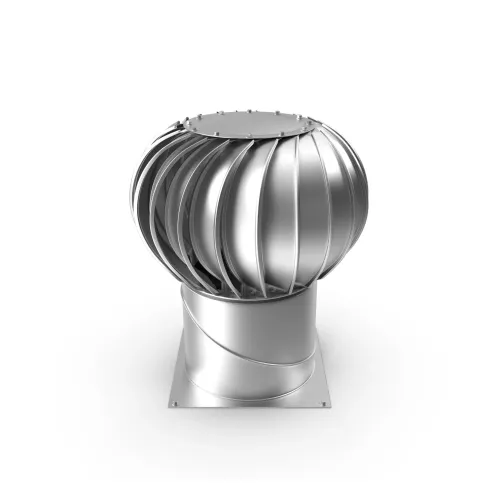
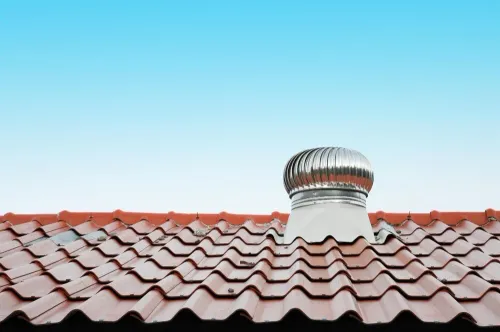
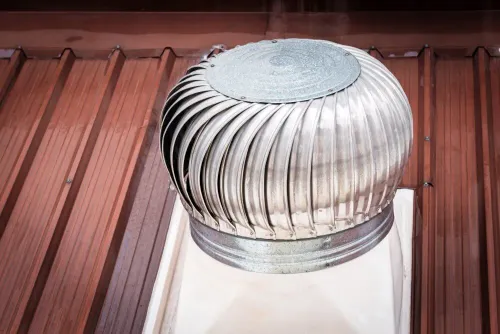
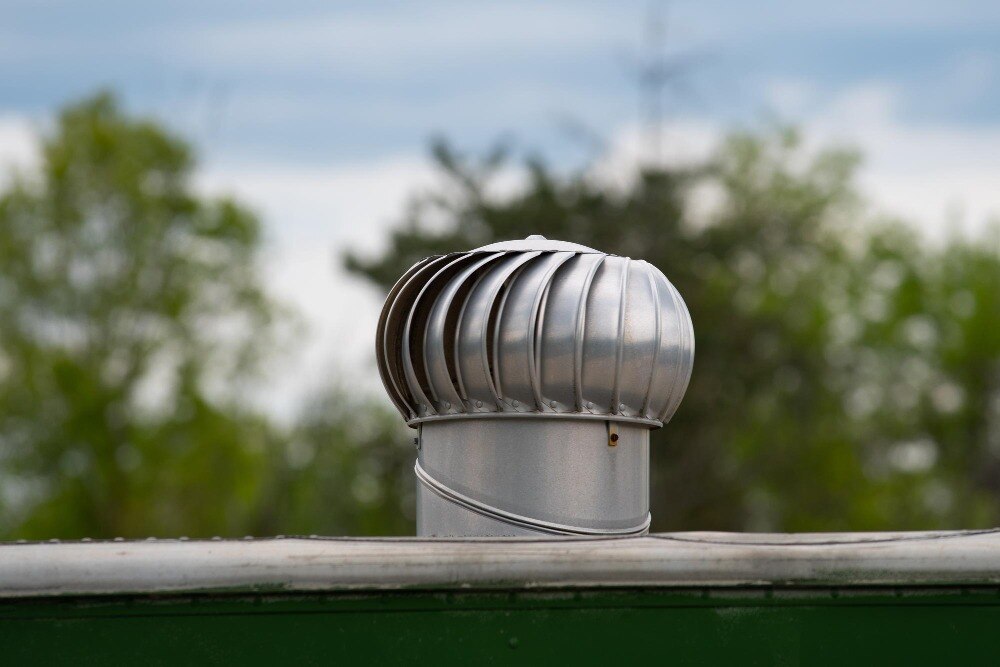
Rotating vanes create a low-pressure region at the roof outlet, pulling indoor air upward and out through the turbine. Buoyancy from hot indoor air can keep exhaust moving when wind is weak because warmer air rises toward the roof.
During calm weather, the turbine may rotate slowly or stop. Stack effect can still provide limited airflow, but the result depends on indoor-outdoor temperature difference, roof height and available openings.
Passive wind-assisted ventilation and powered exhaust are not equivalent:
| Option | How it works | Main limitation |
|---|---|---|
| Passive turbine | Wind turns vanes; heat can add stack-driven flow | Airflow changes with wind and temperature |
| Powered exhaust | A fan and motor force air through the outlet | Requires electricity, controls and maintenance |
A turbine cannot lower outdoor temperature or humidity, and it cannot guarantee a fixed air-change rate. If replacement air cannot enter through louvers, doors, windows or dedicated inlets, exhaust performance falls sharply; a sealed shed can show little useful airflow even while the turbine spins.
That is the practical answer to what is a turbine ventilator for buildings in Khed: it is a passive exhaust device for removing heat or moisture, not an air-conditioner. Choose it only when uncontrolled airflow is acceptable and make-up air is available.
For specified temperature, humidity, contaminant concentration or dependable air changes, use powered exhaust or a controlled ventilation system.
The Khed shed test: when passive exhaust is worth considering
Consider a turbine when a shed has a clear heat or moisture-removal problem, enough replacement-air openings and no need for guaranteed contaminant capture. Hot production sheds, solar-heated warehouses and processes producing non-toxic heat or moisture are suitable starting cases.
- Record floor area, clear height and occupancy. A large, high shed with few people may need less contaminant control than a small, crowded workshop.
- Identify machinery heat, humidity and nuisance vapours. Reject a turbine as the sole control for toxic, combustible or high-concentration contaminants, machine-point fumes or welding smoke.
- Map existing louvers, doors, windows and dedicated inlets. Without make-up air, the turbine depressurises the shed instead of producing useful flow.
- Measure indoor temperature and relative humidity during the worst operating period. Compare the heat-removal benefit with outside-air penalties.
- Treat tightly controlled storage, clean production and moisture-sensitive goods cautiously. Monsoon air can add humidity, while uncontrolled intake can bring dust and contamination.
- Clarify the location behind “turbine ventilator Khed”: confirm Pune district or Ratnagiri district, then record elevation, terrain exposure, building height and local wind conditions.
Khed alone is not a design description. A turbine is a poor choice where performance must remain stable during calm weather, or where temperature, humidity, air cleanliness or air-change rate has a specified limit. Use powered exhaust, source capture and designed make-up air for those conditions.
When outdoor air itself threatens stored goods, compare filtration or conditioned air before cutting the roof.
Turbines versus fans, louvers, ridge vents and HVAC
Choose the method by the problem: passive turbines remove hot or moist air, powered fans provide predictable flow, louvers and doors admit replacement air, and HVAC controls indoor conditions. A turbine air ventilator for buildings in Khed is useful only when exhaust air has somewhere to go and replacement air can enter.
| Option | What it does | When it applies |
|---|---|---|
| Passive turbine | Wind-assisted roof exhaust; weak in calm weather | Heat or moisture relief without a fixed air-change requirement |
| Powered exhaust fan | Maintains designed airflow with a motor and controls | Predictable performance during calm weather or changing process loads |
| Wall louvers or doors | Supplies make-up air | The building lacks low-level intake area |
| Ridge ventilator | Provides continuous high-level exhaust along the roof | A long roof needs distributed natural exhaust |
| Roof monitor | Adds a larger raised daylight and ventilation structure | The project justifies major roof construction |
| HVAC | Controls temperature, humidity and air cleanliness | Occupants, products or processes need conditioned air |
The strongest natural arrangement combines low-level or cross-building intake with exhaust at the highest practical roof level. Several turbines on a sealed shed can depressurize it without delivering useful flow; rotating vanes do not create replacement air.
Use a roof monitor when daylight and a substantial ventilation structure justify its cost. Use HVAC when comfort or cleanliness must be controlled. Roof ventilation does not replace local exhaust ventilation, source capture or designed discharge systems for welding smoke, toxic vapours, combustible contaminants or concentrated machine fumes.
How to estimate quantity, layout and roof fit before cutting sheets
Q = building volume × target air changes per hour. A 1,000 m² shed with a 6 m clear height contains 6,000 m³; at 6 ACH, it needs about 36,000 m³/h of aggregate exhaust capacity before leakage, pressure losses and actual ventilator performance.
Do not apply “one turbine per area.” Request an airflow-versus-wind-speed curve and calculate the number from tested output, intake free area, obstructions, heat load, roof height and required air changes. Several turbines cannot deliver their rated flow if replacement air has nowhere to enter.
Check these conditions before ordering:
- Match the turbine base to the roof profile, sheet material, slope and purlin spacing.
- Confirm the cut-out or throat opening, curb geometry, flashing laps and drainage path.
- Specify fastener pull-out capacity, sealant compatibility and resistance to wind-driven rain; a rotating cowl does not make a penetration watertight.
- Keep the opening and curb clear of insulation, bracing and internal obstructions.
| Item to verify | Record before cutting | Failure if missed |
|---|---|---|
| Roof structure | Purlin spacing and curb support | Sheet vibration, uplift or pull-out |
| Services | Electrical cables, lights and ducts | Damage, shutdown or fire risk |
| Roof position | Avoid gutters, ridge members and bracing | Weak structure or blocked drainage |
| Wind design | IS 875 (Part 3): site wind speed, terrain, height, topography and importance category | Undersized fixing under wind suction |
Have a structural designer approve the curb and load path into adequate members, not thin sheet alone. Include maintenance access and inspect the flashing after the first heavy rain.
What to demand from a turbine ventilator supplier in Khed
A turbine ventilator supplier in Khed should quote measured performance, not just diameter or “cooling area.” Reject an unqualified CFM claim, a free-spinning demonstration, or a label based only on the roof area supposedly served.
| Item | Compare | Reject if |
|---|---|---|
| Throat or neck diameter | Actual opening size and roof compatibility | Diameter is stated without airflow data |
| Tested airflow | m³/h or CFM at stated wind speeds | CFM has no test method or curve |
| Starting speed | Minimum wind speed for rotation and useful exhaust | “Starts in light wind” is the only claim |
| Free area | Net inlet and outlet area after blades, screens and supports | Only gross diameter is supplied |
| Bearings | Sealed bearing type, load rating and replacement method | Bearing specification is absent |
| Van es or blades | Aluminium, stainless steel or coated-steel grade and thickness | Construction is unspecified |
| Balance | Dynamic balance and vibration limits | Demonstration relies on hand spinning |
| Corrosion | Material, coating and salt or industrial exposure rating | “Rust-proof” is the entire specification |
| Rain resistance | Tested wind-driven-rain detail and drainage | Watertightness is assumed from the cowl |
| Warranty and access | Duration, exclusions, inspection and bearing replacement access | Maintenance requires removing roof sheets |
Require these documents:
- Roof layout, airflow calculation and wind-load assumptions
- Structural fixing detail, curb geometry and sheet-profile compatibility
- Flashing laps, fastener pull-out, sealant compatibility and drainage detail
- Product test method and installation references
Hi Tech Patra Depo becomes relevant only as a local manufacturer or supplier to evaluate against these documents. Choose a turbine for measurable heat or moisture relief with adequate make-up air; choose powered or source-capture ventilation when performance must not depend on wind.
Frequently asked questions
What is a turbine ventilator for buildings in Khed?
It is a roof-mounted passive exhaust device with rotating vanes that removes hot indoor air using wind and buoyancy.
When is a turbine ventilator worth considering for a Khed shed?
Consider one when heat accumulates near the roof, indoor air feels stagnant, and powered exhaust or HVAC is unnecessary.
How do turbine ventilators compare with fans, louvers, ridge vents and HVAC?
Turbines use no operating electricity, while fans provide controlled airflow, louvers admit or release air, ridge vents offer continuous passive exhaust, and HVAC also cools and conditions air.
How do you estimate turbine quantity and roof fit?
Assess shed volume, heat sources, inlet openings, roof profile, purlin spacing and available roof area before selecting locations and cutting sheets.
What should you ask a turbine ventilator supplier in Khed?
Request airflow data, throat diameter, material and finish specifications, roof compatibility, flashing details, warranty terms and installation instructions.
Keywords