
The label “SS” is not enough to judge a turbine ventilator: you need the steel grade, throat size, airflow test conditions, roof interface and bearing details. By the end, you will be able to compare a Pune quotation, estimate what information the supplier needs, and identify situations where a wind-driven unit is the wrong ventilation method.
Key takeaways
- Demand SS 304 as the baseline; choose SS 316 for chlorides, fumes or wash-down.
- Size ventilators from building volume, heat load, roof layout and airflow—not roof area alone.
- Match the base and flashing to the roof profile, slope, coating and movement.
- Check gauge, bearing details, airflow data, warranty and acceptance tests in the quotation.
Which stainless-steel grade and specifications should you demand?
Demand a grade, not the words “stainless steel.” SS 304 is the normal industrial baseline for most roof ventilators. Choose SS 316 for chloride exposure, coastal air, aggressive chemical fumes or frequent wash-down; Pune’s inland location alone does not require 316.
| Grade | Suitable exposure | Buyer’s decision |
|---|---|---|
| SS 304 | Ordinary industrial roofs, dry or moderately humid air | Standard baseline |
| SS 316 | Chlorides, coastal air, chemical fumes, frequent wash-down | Specify when the process environment demands higher corrosion resistance |
A search for “stainless steel turbine ventilator pune” identifies a product and location, not a performance standard. Put the grade on the quotation and request a material certificate; “SS” alone does not prove 304, 316 or corrosion performance.
- Specify sheet thickness, weld continuity and finish; inspect for pinholes, cracked welds and sharp edges.
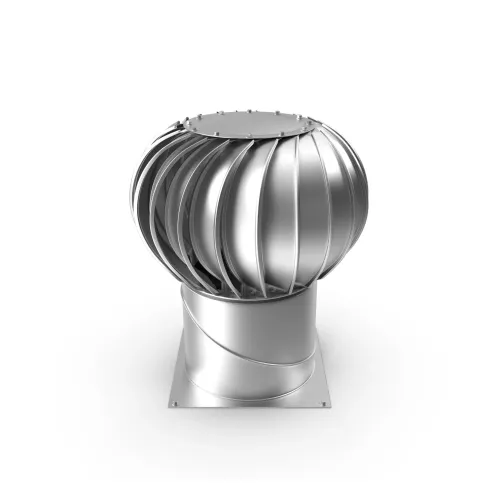
- Record shaft material, fastener material, rotor diameter, nominal throat diameter, base size, total weight, temperature limit and bearing type.
- Request effective free area and airflow test conditions. Throat diameter is more useful than external cowl diameter because blade pitch, internal obstructions and outlet geometry alter actual flow.
Do not assume every internal part is stainless. Galvanized or mild-steel shafts, brackets and fasteners can become the first rust points, while contact between stainless steel and GI, aluminium or carbon steel can create galvanic corrosion in wet conditions. Require compatible materials or electrical isolation at each joint.
How do you size turbine ventilators for a real building?
Floor area alone cannot determine quantity. Multiply floor area by clear roof height to obtain building volume; then select an air-change target based on occupancy, process heat, emissions and the required heat-removal duty. Crowded workshops and hot processes need more exhaust than lightly occupied storage.
Use this calculation:
Required exhaust flow (m³/h) = building volume (m³) × target air changes per hour
Divide the result by 3,600 to convert m³/h to m³/s. Compare that duty with supplier airflow data, then check whether the available intake openings can admit the same volume.
- Provide floor area, roof height, process heat load, emissions, occupancy, required ACH, roof geometry and intake-opening area.
- Treat “one unit per square feet” as a preliminary rule of thumb, not a design result.
- Demand airflow data stating wind speed, indoor-to-outdoor temperature difference, throat diameter, effective free area and test method.
- Provide low-level louvers, doors, ridge inlets or another make-up-air path; a sealed building will restrict exhaust and reduce airflow.
A turbine is wind-assisted and stack-assisted, so it cannot guarantee the target ACH during calm weather. The phrase “ss turbine air ventilator manufacturer in pune” identifies a search category, not a performance standard.
| Option | Flow behaviour | Suitable use |
|---|---|---|
| Turbine ventilator | Wind and buoyancy dependent | Natural heat and air removal |
| Powered exhaust fan | Controlled motor-driven flow | Reliable calm-weather ventilation or process capture |
Choose powered exhaust when you need measured continuous flow, source capture or dependable performance regardless of wind.
How should the base and flashing match your roof?
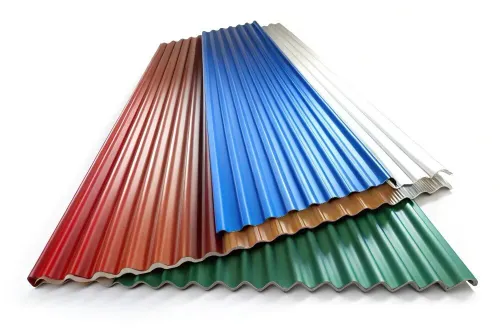
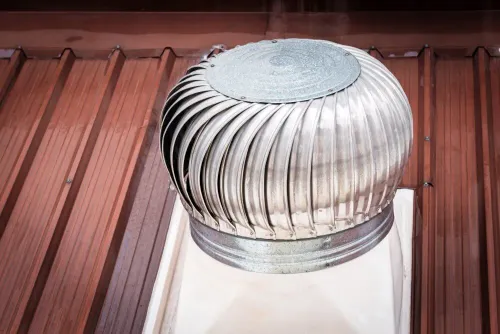
A profiled weathering collar is the safe interface for corrugated or trapezoidal colour-coated GI sheets. An improvised flat plate can distort the ventilator base, leave gaps over unsupported valleys and leak around fasteners.
1. Identify the roof before ordering: confirm roof pitch, sheet profile, roof thickness, opening diameter, base dimensions and the clearance required around the rotor. For corrugated or trapezoidal sheets, specify a formed collar that follows every crest and valley.
2. Match the penetration to the roof system. Use formed flashings for asbestos-cement sheets, standing-seam clamps or a roof manufacturer-approved penetration for standing-seam roofs, and a sealed curb or upstand with flashing for RCC roofs. Do not drill a standing seam without approval.
3. Require maintenance clearance around the rotor and neck. Check nearby ridge sheets, purlins, ducts and taller equipment; each can restrict airflow or prevent bearing access. Keep the unit’s discharge path clear.
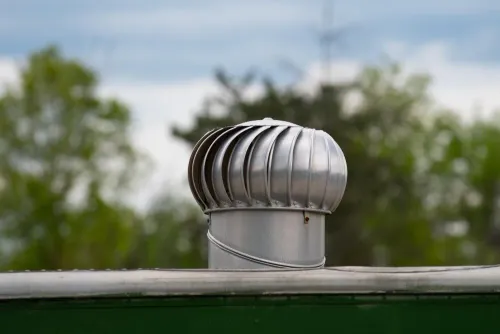
4. Inspect the finished interface, not only the stainless-steel body. Check cowl overlap, blade spacing, bearing housing, neck flashing, drainage path, rain cap and weather seal. Confirm sealant compatibility with the sheet coating and isolate dissimilar fasteners from GI, aluminium or carbon steel.
5. Before accepting an SS turbine air ventilator Pune installation, run water over the upper flashing and observe whether it sheds away from the opening. A complete roof detail matters more than the product label “ss turbine air ventilator pune.”
What happens during monsoon, dust and low-wind conditions?
Rain resistance depends on the complete assembly and roof penetration, not on stainless steel alone. Before installation in Pune, PCMC or Chakan, ask for the cowl overlap, blade spacing, bearing housing, neck detail, drainage path and rain-shedding design for wind-driven monsoon rain; reject an unsupported “rainproof” claim.
Confirm these operating risks:
- Dust ingress: check seals, clearances and cleaning access; deposited dust can unbalance the rotor.
- Industrial fumes: match materials and fasteners to the exposure; stainless steel does not prevent attack from aggressive fumes.
- Pressure reversal: provide make-up-air openings, because changing indoor pressure can cause backdrafts.
- Rotor stoppage: establish what happens during calm weather, heavy dust or bearing contamination.
| Condition | Confirm before approval | Consequence if ignored |
|---|---|---|
| Monsoon rain | Cowl overlap, blade spacing, bearing housing, neck flashing and drainage | Water reaches bearings or leaks through the penetration |
| Low wind | Starting torque, rotor balance and sealed-for-life bearings | A fast rotor stalls and provides little useful ventilation |
| Dust and fumes | Cleaning access, corrosion compatibility and service plan | Deposits increase friction and fumes shorten component life |
Do not use a standard turbine as the primary system for high-contaminant extraction, hazardous process fumes, smoke extraction, code-required fire or temperature performance, filtered supply air, or measured continuous flow. Specify an engineered ducted or powered system with applicable certification.
What should a Pune manufacturer’s quotation and acceptance check contain?
Do not compare photographs or nominal outside diameter. A turbine ventilator manufacturer Pune quotation must state the performance and roof-interface details that determine whether the unit fits and works.
- Require the SS grade, sheet thickness, throat diameter, effective free area, airflow test conditions, operating wind-speed range, temperature limit, total weight, bearing arrangement, shaft material, base or flashing profile, and fastener material.
- Ask whether the bearings are sealed-for-life or exposed bushings. Record the expected axial and radial loads, warranty exclusions, replacement-bearing availability, and whether a bearing can be replaced without removing the flashing.
- Match the stated airflow to the test wind speed, temperature difference, throat size and test method. A capacity without those conditions cannot support a supplier comparison.
- Confirm every grade, dimension, airflow condition and roof detail on the quotation and datasheet. The label “SS turbine air ventilator” is not a specification.
At delivery, run this acceptance checklist:
- Material certificate confirms the quoted stainless-steel grade.
- Rotor free-spins without scraping, abnormal vibration or excessive run-out.
- Edges are free from sharp burrs, and welds are continuous.
- Flashing fits the roof profile without distortion or unsupported gaps.
- Fasteners match the roof material and do not create a galvanic or sealing problem.
- Cowl overlap, drainage path and other water-shedding details direct rain away from the penetration.
Hi Tech Patra Depo can be approached for a Pune-area, project-specific specification; accept the unit only against documented values, not the manufacturer label.
Related product
 | Turbine Ventilator Turbine Air Ventilator Manufacturer, Supplier, Distributor, Dealers, Trader In Pune, PCMC, Chakan, Talawade – Efficient & Energy Saving Ventilation... View product → |
Frequently asked questions
Which stainless-steel grade should you specify for a turbine air ventilator?
Specify SS 304 for most industrial roofs. Choose SS 316 when the site has chloride exposure, coastal air, aggressive chemical fumes or frequent wash-down. Pune’s inland location alone does not require SS 316.
How do you size turbine ventilators for an industrial building?
Use the building volume, heat load, process emissions, roof layout and required air changes. Do not size units from roof area alone; confirm airflow data at the expected wind speed and provide balanced intake openings.
How should a turbine ventilator base fit the roof?
Match the base and flashing to the roof sheet profile, roof slope, coating and movement. Check the opening, fasteners, sealant, end laps and drainage path before installation.
What should a Pune manufacturer include in the quotation?
Require the stainless-steel grade, sheet gauge, turbine diameter, airflow or performance data, bearing type, base dimensions, flashing details, finish, warranty, delivery scope and acceptance checks.
Keywords