
A warehouse project in Moi needs more than a transparent panel: you must match daylighting, heat control, structural spans, fire performance and installation details to the building. By the end, you will have a practical specification and quotation checklist for comparing polycarbonate suppliers without treating the sheets as structural decking.
Key takeaways
- Use rooflight strips for warehouse daylight, not as structural decking.
- Match sheet profiles, fixings and spans to the purlin layout.
- Plan movement, sealing and thermal expansion before installation.
- Ask suppliers for sheet construction, dimensions, warranty and installation details.
Where polycarbonate sheets fit in a Moi warehouse
Use polycarbonate rooflight strips for warehouse storage, picking, dispatch and process zones; use wall panels where side daylight helps, and loading-bay covers, covered walkways or canopies where weather protection matters. Do not treat the sheets as structural decking: purlins, wind uplift and maintenance loads still need engineering.
| Area | Best application | Daylighting starting point |
|---|---|---|
| Main storage and dispatch roof | Translucent strips over aisles and work zones | 10–15% of roof area |
| Packing or process area | Rooflight strips with solar-control or opal finish | 15–20%, only after glare and heat review |
| Loading bays, walkways and canopies | Weather cover with local daylight | Size to the task; avoid illuminating the entire roof |
| Wall panels | Side lighting at loading or circulation areas | Use alongside rooflights, not as their replacement |
Treat 10–15% as a design starting point, not a universal rule. Confirm the final area with a daylight calculation that considers roof height, rack layout, orientation, light transmission, heat gain and glare; exceeding 20% can create uncomfortable temperatures and harsh contrast.
Daylight sheets do not replace ventilation. Provide high-level ridge or exhaust ventilation, balanced low-level air inlets and condensation control, especially over warm process areas. A quotation for polycarbonate sheets for warehouses Moi should state the resin grade, profile, thickness, UV-protected face and fire classification, because “translucent sheet” alone cannot be compared reliably.
Choose the sheet construction and compare the alternatives
Use multiwall polycarbonate for warehouse zones where insulation matters; use profiled solid polycarbonate for impact-prone daylight strips where lower cost and simpler installation matter more. Neither replaces structural decking, purlins or a designed roof system.
| Option | Insulation | Impact and durability | Cost and best use |
|---|---|---|---|
| Multiwall polycarbonate | High; trapped air reduces heat transfer | Good impact resistance, but edges need protection | Higher; broad rooflight areas and cooler storage zones |
| Profiled solid polycarbonate | Low to moderate; similar to profiled metal roofing | Strong impact resistance and easy to replace | Moderate; rooflight strips, canopies and loading bays |
| Insulated metal sandwich panel | High; depends on core thickness and joints | Good weather protection; denting affects the outer skin | Higher; opaque roof areas needing temperature control |
| Single-skin coated steel | Low; transmits outdoor heat quickly | Good puncture resistance but can corrode after coating damage | Lowest; unconditioned stores where insulation is not a priority |
Choose a UV-protected outer face, not an unmarked sheet. Ask for the resin grade, profile, thickness, tested reaction-to-fire classification and warranty conditions; “fire resistant polycarbonate” is not a usable specification because performance changes with thickness and mounting.
For a polycarbonate roofing sheet moi quotation, compare the same thickness, light-transmission level, support spacing and accessories. A cheap sheet becomes expensive when it needs closer purlins, replacement after impact or proprietary closures omitted from the price.
Polycarbonate suits daylighting; coated steel usually wins for large opaque roof areas where minimum cost and heat control outweigh natural light.
Build a specification around the roof structure
Confirm the roof structure before comparing sheets: purlin spacing, allowable span, wind uplift, maintenance load and fixing capacity determine whether the proposed profile is suitable. Polycarbonate is a daylighting and weather-screening layer, not a replacement for structural decking or purlins.
| Detail | Confirm on the quotation or drawing | Why it matters |
|---|---|---|
| Resin and profile | Resin grade, corrugated or multiwall profile, thickness and maximum support spacing | An unsupported span can sag or fail under wind |
| Design actions | Wind uplift, imposed maintenance load and connection capacity for the Moi site | A sheet rating alone does not prove roof safety |
| Protection and fire | UV-protected face, fire classification and warranty conditions | The wrong face upwards can cause discolouration and void the warranty |
| Accessories | Compatible fasteners, washers, closures, ridge pieces and eave drainage | Mixed components create leaks and crushing at fixings |
A quotation labelled “polycarbonate roofing sheet Moi” is incomplete unless it includes these project-specific details. Require marked-up drawings or samples showing:
- Sheet orientation, side and end laps, ridge, eave and ventilation openings
- Fastener type, spacing and oversized holes or sliding fixings for movement
- Thermal-expansion allowance, with the coefficient checked at approximately 65–70 × 10⁻⁶/K
- Test reports supporting the stated fire classification and warranty
Specify condensation control separately from water tightness. Warm warehouse air can condense beneath a cool sheet, so check anti-condensation treatment, vapour-control detailing, drainage and air movement before ordering.
Prevent leaks, cracking and unsafe roof access
Protect polycarbonate sheets by allowing thermal movement at every fixing. Polycarbonate expands at approximately 65–70 × 10⁻⁶/K; a 10-metre sheet can move about 6.5–7 millimetres through a 10°C change. Use the manufacturer’s oversized fixing holes or sliding fixings, compatible sealing washers and recommended fastener spacing. Do not clamp a long sheet tightly like steel roofing.
- Verify that purlin spacing, sheet span, wind uplift and maintenance loads match the specified profile. The sheet is a daylighting and weather-screening layer, not structural roof decking.
- Install the UV-protected face outward and follow the stated roof pitch, side-lap and end-lap details.
- Use profile closures, flashings and sealants approved for polycarbonate. An ordinary solvent-based sealant can soften the sheet or damage its surface.
- Tighten fasteners until the washer seals; over-tightening creates stress cracks around the hole.
- Keep tools, offcuts and falling materials away from the panels during construction.
Treat translucent panels as non-walkable surfaces, regardless of thickness. Provide designed walkways, crawling boards and fall protection; never step on a panel or rely on the purlins beneath it. Mark access routes so maintenance teams do not create impact damage.
Wash with clean water and a compatible mild, water-based cleaner. Never dry-scrape the surface or use aggressive solvents. Inspect after storms and maintenance work for cracked sheets, loose fixings and failed laps, then replace damaged panels before water enters.
Condensation beneath a sound sheet needs separate control through vapour detailing, anti-condensation treatment and adequate air movement.
What to ask a polycarbonate supplier in Moi before ordering
Ask for documents before discussing price. A credible polycarbonate roofing sheet manufacturer in Moi will identify the exact product rather than quote “warehouse sheets” as one generic item.
1. Request a labelled sample and technical data sheet showing the resin grade, profile, thickness, colour, light transmission, UV-protected face, fire classification, warranty conditions, maximum support spacing and permitted design loads. Confirm that the fire classification applies to the proposed thickness, construction and mounting arrangement.
2. Require a marked-up roof drawing showing sheet orientation, side and end laps, ridge and eave closures, ventilation openings, thermal-expansion allowance and fastener spacing. The UV-protected face is commonly one-sided; installing it downward can cause early discolouration and void the warranty.
3. Ask for the delivery area, available lengths, minimum order, production lead time, transport method and unloading responsibility. Hi Tech Patra Depo, for example, should confirm these commercial details in writing if it is being considered for the order.
4. Make the quotation itemised: sheets, closures, flashings, fasteners, sealing washers, installation labour, transport, taxes and replacement terms. Reject a quotation that omits accessories or gives no validity period.
5. Check that the quotation states purlin spacing, wind-uplift assumptions and maintenance-load limits; sheets are not structural decking. Also ask how anti-condensation treatment, vapour control, drainage and air movement address underside condensation. Compare every polycarbonate roofing supplier Moi result against the same checklist.
Related product
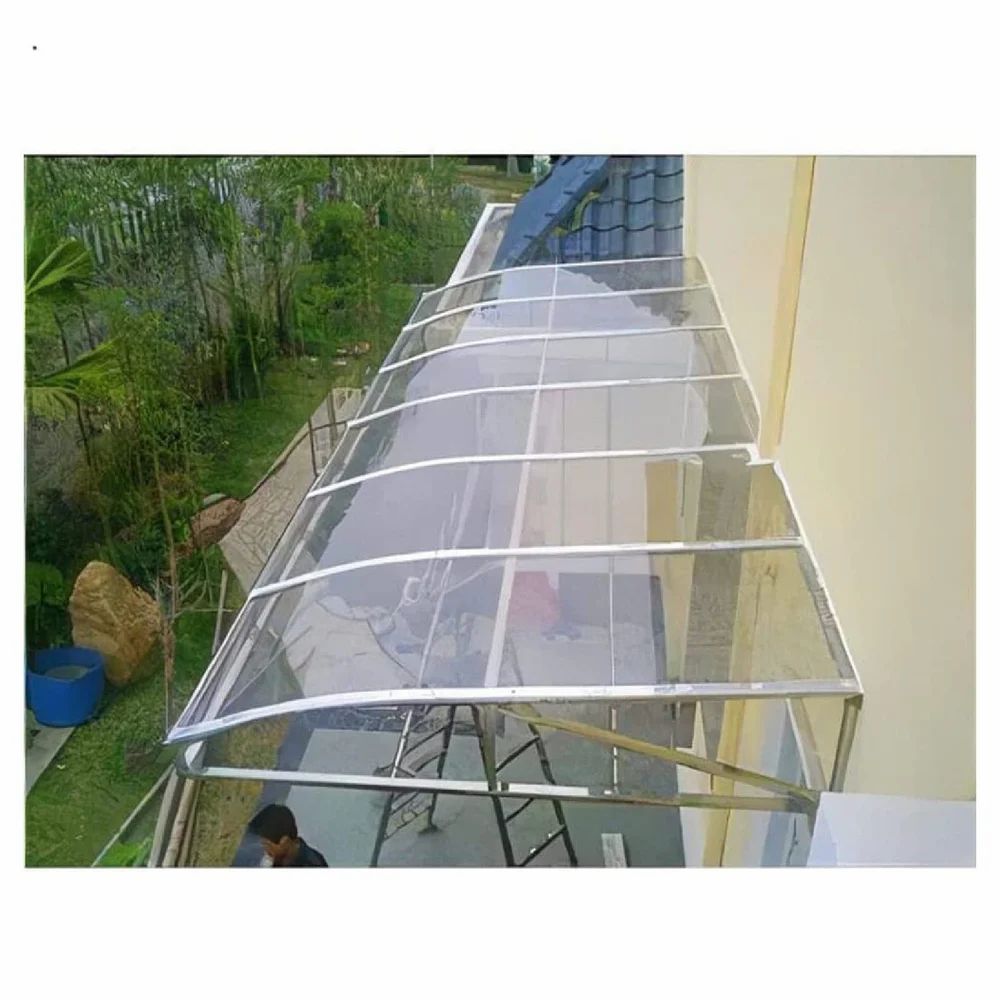 | Roofing Sheet Durable, Transparent & Modern Roofing Solution Looking for a strong, lightweight, and transparent roofing option? Polycarbonate Roofing Sheets are... View product → |
Frequently asked questions
Where do polycarbonate sheets fit in a Moi warehouse?
Use polycarbonate rooflight strips above storage, picking, dispatch and process zones. Use wall panels where side daylight helps, and use sheets for loading-bay covers, covered walkways and canopies.
Which polycarbonate sheet construction should you choose?
Compare solid, twin-wall and multiwall sheets against the required daylight, insulation, impact resistance, weight and cleaning access. Select the construction that suits the warehouse zone rather than treating every sheet as interchangeable.
How should you specify polycarbonate sheets around the roof structure?
Confirm the roof profile, purlin spacing, sheet span, fixing locations, wind uplift and maintenance loads with the structural design. Polycarbonate sheets provide roof covering or daylighting, not structural decking.
How can you prevent leaks and cracking in polycarbonate roofing?
Use compatible profiled closures, washers and sealants, allow for thermal movement, avoid overtightening fixings and provide safe access for inspection. Never walk directly on unsupported sheets.
What should you ask a polycarbonate roofing supplier in Moi?
Ask for the sheet type, thickness, profile, dimensions, light-transmission information, UV protection, fire information, fixing method, warranty terms and installation guidance.
Keywords