
Choosing the wrong stainless-steel grade, throat size, roof adapter, or replacement-air arrangement can leave an industrial shed hot, leaky, or poorly ventilated. You will be able to specify the unit, check roof compatibility, estimate the number required, and compare a Nighoje quotation with alternatives on an equal basis.
Key takeaways
- Choose SS 304 for ordinary exposure and SS 316 or 316L for chloride or chemical exposure.
- Confirm airflow figures, roof profile, base dimensions and flashing before requesting a quotation.
- Size the complete intake-and-exhaust air path instead of counting roof turbines alone.
- Compare quotations using identical steel, airflow, warranty, installation and maintenance requirements.
Specify the stainless steel and airflow before asking for a price
Specify SS 304 or SS 316/316L, not merely “SS,” before requesting a price. SS 304 suits ordinary industrial atmospheres; choose SS 316 or 316L for chloride, coastal, chemical, or aggressive washdown exposure.
1. Put these construction details on the enquiry: sheet thickness, shaft grade, fastener grade, bearing type, weld finish, blade-balance standard, and start-up torque. A polished housing does not prove that the rotating assembly will resist dust, corrosion, or seizure.
2. Ask for the throat diameter and roof-curb net free area, not only the outside cap diameter. Require airflow or pressure-loss data at named wind speeds. Two units with the same advertised diameter can move different air volumes because their throat, blade pitch, and free area differ.
3. Make a first-pass design from shed length × width × average internal height; use ridge height to account for the hot-air reservoir. Then record occupancy, process heat, and contaminant load.
Calculate heat-removal airflow separately from pollutant-control airflow: a turbine can relieve accumulated heat but cannot replace local exhaust at a welding point, furnace, chemical process, or other source.
4. Require the quotation to state the target air-change or heat-removal rate, replacement-air openings, and unit quantity. A sealed shed will exchange little air through roof turbines alone.
Compare a turbine air ventilator manufacturer in Nighoje with alternatives only on identical SS grade, throat diameter, net free area, test wind speeds, roof accessories, and warranty terms.
Match the ventilator base to the roof and stop rain at the penetration
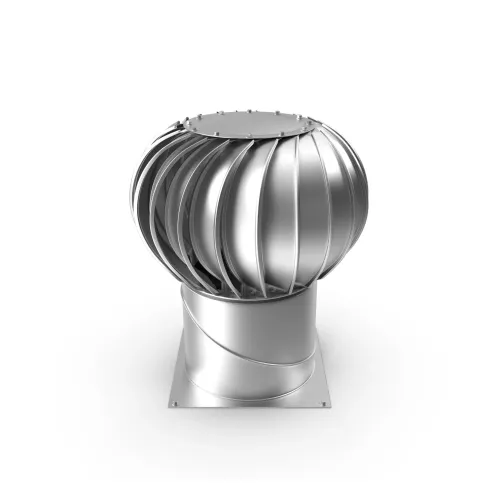
Before cutting the opening, obtain a dimensional drawing that shows the base diameter, curb height, flashing width, fixing positions, sealant zone, and clearance from purlins and roof sheets. A guessed opening can strike steelwork, weaken the sheet, or leave a gap that collects rain.
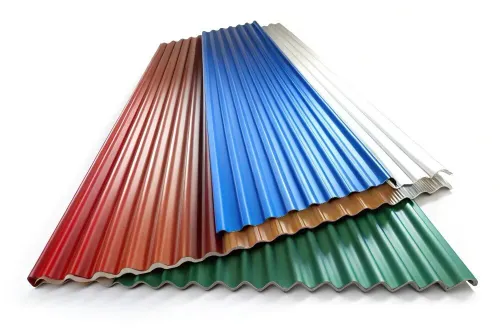
1. Confirm the roof profile and maximum permitted slope in writing. Corrugated and trapezoidal sheets need a matching base plate, adapter, and weatherproof curb; standing-seam roofs need a seam-compatible clamp or curb that avoids puncturing panels.
Asbestos-cement needs a supported curb and careful cutting, while sandwich panels need a sealed adapter, panel closure, and structural support independent of the thin outer skin.
2. Specify the connection, not just “sealant.” The drawing must name the fastener type, washer material, hole size, lap direction, thermal-movement allowance, and compatible flashing or weatherproof curb. A bead of sealant alone cracks, separates, and leaves the penetration exposed.
3. Isolate dissimilar metals. Stainless steel against galvanized or zinc-coated roofing can form a galvanic-corrosion cell in wet conditions; require a continuous isolating gasket, compatible flashing, or another documented separation detail.
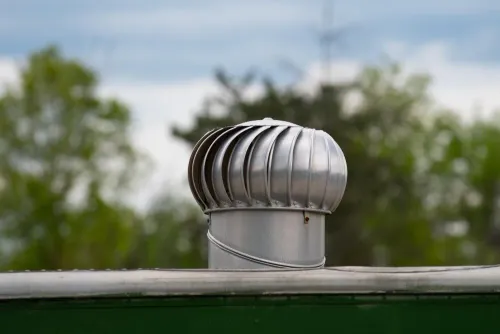
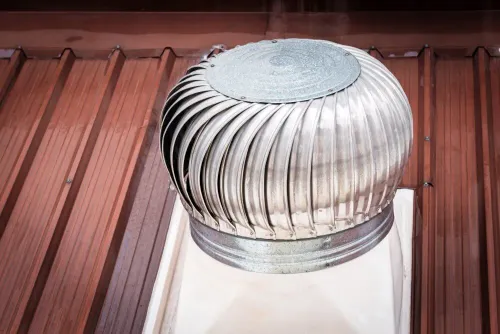
4. Check the cap overlap, blade drainage paths, wind-driven-rain baffle, and wind-uplift fixing pattern. After installation, inspect for loose fasteners, ponding, cracked sealant, and leaks, including after heavy rain and strong wind.
Ask any turbine air ventilator supplier in Pune for these drawings and accessories as separate quotation lines, including the curb, adapter, fasteners, lifting, and installation.
Design the air path instead of counting roof turbines alone
A wind-driven turbine ventilates effectively only when replacement air can enter as fast as hot air leaves. A sealed shed with roof turbines alone may exchange little air or pull dusty, unsafe air through cracks.
Start with shed length, width, ridge height, building height, worker occupancy, process heat, and contaminant load. Set the target air changes per hour or calculate the airflow needed to remove sensible heat; pollutant control requires a separate design.
| Condition | Effect on a turbine air ventilator | Design response |
|---|---|---|
| Open wall louvers or ridge inlets | Supplies replacement air with lower resistance | Size net inlet area and place openings on the windward side |
| Doors or controlled openings | Improves entry airflow but depends on operation | Keep a defined opening schedule |
| High inlet resistance or sealed walls | Reduces exhaust flow and draws air through leakage | Add larger, lower-resistance inlets |
| Variable wind direction and speed | Changes natural-draft airflow | Request data at stated wind speeds and directions |
| Indoor air warmer than outdoors | Adds buoyancy-driven exhaust | Include the indoor-outdoor temperature difference |
Do not accept an unsupported capacity figure. Request throat diameter, net free area, pressure-loss data, and airflow at named test conditions; cap diameter alone cannot determine output.
Use roof turbines for general accumulated hot-air relief. Select an electric exhaust fan when airflow must remain available during calm weather, a powered make-up air unit when replacement air needs control or filtration, and dedicated local exhaust at welding fumes, solvent vapour, furnace heat, or chemical emissions.
For a turbine air ventilator from Nighoje, calculate the number from the target airflow or heat-removal duty and net inlet area, not roof area alone.
Compare a Nighoje quotation with Pune suppliers on equal terms
A Nighoje quotation is the right supply route only after you verify who will make and dispatch the unit. Ask whether the seller is the manufacturer, a local fabricator, or a trader, then record the manufacturing location, dispatch point, lead time, made-to-order status, and replacement-bearing availability.
Compare suppliers only on identical specifications:
- SS grade and sheet thickness
- Throat diameter, net free area, and airflow test condition
- Roof profile, adapter design, and warranty terms
A turbine air ventilator manufacturer in pune and a turbine air ventilator manufacturer in Nighoje are not equivalent merely because both use “manufacturer” in their descriptions.
| Route | Verify before comparing |
|---|---|
| Nighoje source | Factory location, dispatch point, production lead time, made-to-order status, bearing stock |
| Pune source | Local stock or fabrication, dispatch date, bearing stock, warranty contact |
| Either route | Drawing, material declaration, airflow data, roof adapter, accessory pricing |
Ask every turbine air ventilator supplier in pune to price these separately: ventilator body, curb or flashing, roof adapter, fasteners, sealant, transport, lifting, installation, and commissioning. A low body price can conceal the flashing, lifting equipment, or roof-profile adapter you still need.
For Hi Tech Patra Depo, request the technical drawing, material declaration, dispatch commitment, accessory list, and service contact; those documents test the supply route more reliably than the word “manufacturer” alone.
Use a drawing, installation check, and maintenance plan to approve the unit
Approve the installation only against an approved drawing and a documented inspection record. Before fabrication, obtain the roof-profile adapter details, fastener schedule, flashing arrangement, and clearance from purlins and roof sheets.
1. Check that the drawing states the base diameter, curb height, flashing width, fixing positions, sealant zone, roof slope limit, and roof-profile compatibility. Do not approve fabrication if these dimensions are missing.
2. During installation, measure the roof opening against the drawing. Confirm that the base sits flat, the isolating gasket is continuous, and fasteners are tight without crushing the sheet.
3. Inspect the flashing for a drainage path away from laps and penetrations. Require a detail that accommodates thermal movement rather than treating sealant as the only weather seal.
4. Spin the assembly by hand before commissioning. Check shaft alignment, blade balance, bearing smoothness, start-up torque, abnormal noise, and resistance to seizure from dust or corrosion.
5. Photograph the underside, roof opening, gasket, fasteners, and roof connection. Inspect the installation after the first heavy rain and after strong winds; reject ponding, leaks, loose fixings, cracked sealant, or displaced flashing.
6. Set the maintenance interval from exposure and dust load. At each inspection, check bearings, shaft play, blade damage, corrosion, blocked inlets, loose fasteners, and failed sealant.
Keep the serial or batch reference with the approval record. Before purchase, confirm that matching bearings and other replacement parts are available.
Frequently asked questions
Which stainless steel grade should you specify for a turbine air ventilator?
Specify SS 304 for ordinary industrial atmospheres. Choose SS 316 or 316L where the ventilator faces chloride, coastal, chemical or aggressive washdown exposure.
How do you match a turbine ventilator to the roof?
Match the ventilator base and flashing to the roof sheet profile, slope and opening. Seal the penetration with a properly formed weatherproof flashing system rather than relying on sealant alone.
How should you compare turbine air ventilator quotations in Pune and Nighoje?
Request the same steel grade, airflow figure, base dimensions, roof compatibility, installation scope, warranty and maintenance terms from every turbine air ventilator manufacturer or supplier.
What should you check before approving a turbine air ventilator?
Approve the unit after reviewing a roof layout or drawing, airflow assumptions, penetration and flashing details, installation checks, rotation, leakage protection and a maintenance schedule.
Keywords