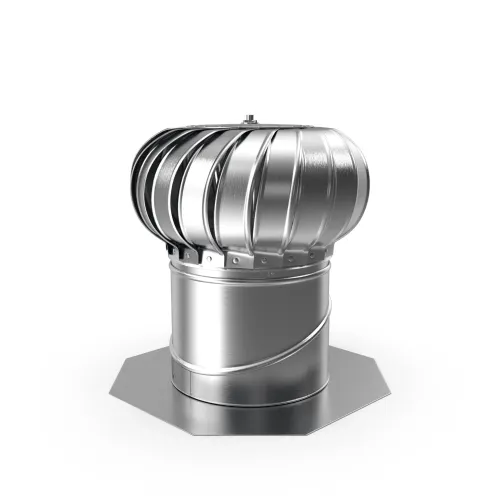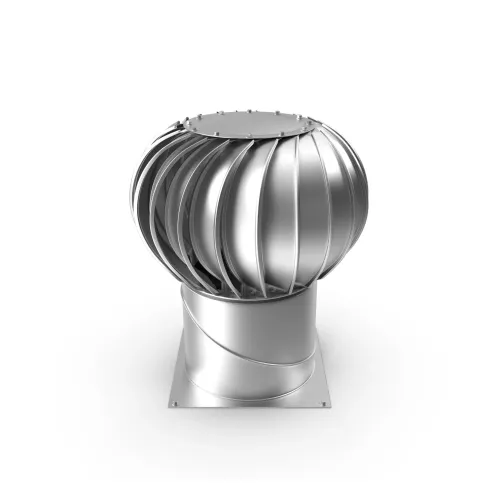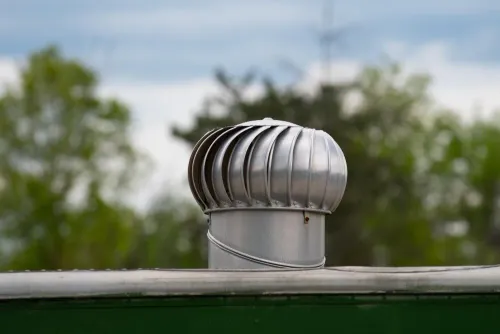
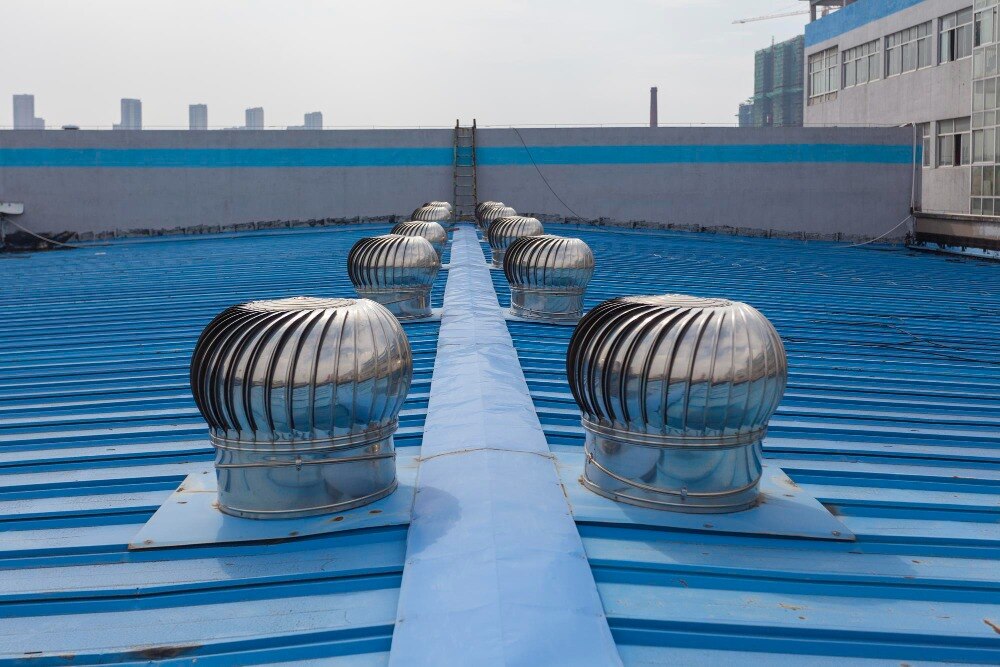
A roof turbine is a passive exhaust device, so its value depends on heat load, contaminant risk, wind exposure and a deliberate path for replacement air. By the end, you will be able to test whether your Talegaon facility needs passive exhaust, mechanical ventilation or a hybrid system, then specify a roof installation that will perform and remain weather-tight.
Key takeaways
- Calculate required airflow before counting turbine ventilators.
- Use passive roof exhaust only with reliable low-level replacement air.
- Check roof penetrations, wind paths, flashing and monsoon drainage.
- Demand stainless grade, airflow data and written acceptance criteria.
Start with heat, contaminants and required airflow
Passive roof exhaust is suitable only when heat or general dilution is the problem, replacement air can enter at low level, and outdoor conditions will provide enough driving force. Before counting SS turbine air ventilators for facilities in Talegaon, define the airflow the building actually needs.
1. Measure the indoor heat load from machinery, furnaces, lighting and occupants, then estimate the sensible-heat removal airflow. Use the temperature you will accept inside and the outdoor design temperature; roof area is not a valid starting point.
2. Identify contaminants separately. Welding fumes, solvent vapour, paint mist, oil smoke, powders, combustible dust and toxic gases require source capture or a designed mechanical system. A roof turbine only dilutes and removes general warm air; it does not provide filtered, measured airflow or prove worker protection.
3. Check the required air-change rate for occupancy and process conditions, then provide a low-level inlet path through wall louvers, doors or dedicated openings. A turbine air ventilator for buildings Talegaon cannot deliver useful flow if replacement air is blocked; the system may pull air through dusty cracks or process areas instead.
4. Test the operating risk during calm, hot conditions. Wind-driven capacity falls when roof-level wind is low, while stack flow needs both a temperature difference and vertical separation between inlets and outlets. Retain powered exhaust or use a hybrid arrangement when machinery, occupied work areas or production fumes need dependable airflow.
Reject passive-only ventilation for cleanrooms, humidity control, solvent handling or safety-critical emissions. Ask for the exact turbine’s airflow-versus-static-pressure data before deciding whether the roof outlet can meet the calculated duty.
Match the ventilation method to the operating risk
Choose a turbine air ventilator for buildings in Talegaon only when passive heat exhaust is acceptable and the roof has reliable wind exposure, a clear discharge path and low-level replacement-air inlets. It cannot guarantee airflow during calm weather.
| Option | What it means | When it applies |
|---|---|---|
| Turbine ventilator | Wind-driven roof exhaust with low electrical demand | Warm, non-hazardous spaces where variable airflow is acceptable and doors, louvers or wall inlets can supply replacement air |
| Exhaust fan | Mechanically controlled air extraction | Welding fumes, solvents, dust, humidity or any process needing dependable extraction; provide make-up air |
| Ridge vent | Continuous passive outlet along the roof ridge | Heat removal from long, unobstructed roofs with adequate eave inlets and no requirement for measured airflow |
| Wall louvers | Fixed openings for intake or cross-ventilation | Buildings with suitable wind-facing and opposite-wall openings; protect against rain, insects and dust |
| Powered roof ventilator | Roof-mounted fan with controlled discharge | Occupied or heat-sensitive areas requiring scheduled or interlocked extraction, with electrical supply and maintenance access |
| Evaporative cooling | Air cooling through water evaporation | Dry-air conditions where added humidity is acceptable; avoid it for humidity-sensitive stock, corrosion risks or solvent processes |
Do not place turbines by roof area alone. A turbine air ventilator needs sufficient inlet area, and windward openings can force short-circuiting or reverse flow. Use a hybrid system when production varies, fumes require control or safe conditions depend on a specified air-change rate.
Check the roof, wind path and monsoon detailing
Safe installation and effective discharge require sound roof support, an exposed outlet, low-level replacement-air inlets and monsoon drainage. Inspect the roof sheets, purlins, slope, corrosion and available clearance before cutting an opening; fix a turbine to structural members, not thin cladding alone.
Check these site conditions before approving the layout:
- Confirm that each opening fits between purlins and that the curb can transfer wind and maintenance loads into the structure.
- Keep the outlet clear of parapets, higher roof sections, solar panels, exhaust stacks and neighbouring buildings that can block or recirculate discharge.
- Map prevailing wind directions and windward doors, louvers and wall openings. Uncontrolled windward openings can force air through the building, create stagnant zones or reverse flow at roof units.
- Provide adequately sized low-level inlets. Without them, a turbine pulls air through doors, wall cracks or dusty process areas instead of ventilating the occupied zone.
- Specify a raised curb, continuous flashing, sealed joints and a visible drainage path away from the roof opening.
- Require a documented rain-ingress or weathering test for the assembled curb and head; a rotating cap alone is not waterproofing.
- Leave safe access for inspection, cleaning, bearing replacement and removal of nesting material or dust.
Do not accept a summer layout as proof of monsoon performance. Verify discharge against the model’s airflow and static-pressure data, and recognise that calm roof-level wind removes useful turbine capacity; retain mechanical exhaust where fumes, heat-sensitive equipment or process control demand guaranteed airflow.
Specify performance, stainless grade and structural details
For an SS turbine air ventilator in Talegaon, demand a capacity curve, not a diameter-based promise. The curve must show airflow against static pressure for the exact model, with test conditions for wind speed and temperature difference. Check free discharge area, roof height, inlet area and pressure loss through screens or louvers.
Specify these items in the purchase document:
- Stainless grade: SS 304 or SS 316, stated separately for the rotor, casing, shaft, fasteners and welds. Request thickness in millimetres and a material certificate.
- Capacity: rated airflow in m³/h at stated wind speeds and static pressures, plus the minimum operating condition. Do not accept “one ventilator per 1,000 square feet.”
- Structure: curb dimensions, base-ring thickness, anchor arrangement, allowable roof load, wind-uplift resistance and compatibility with the existing sheet profile.
- Serviceability: bearing type and replacement method, access for inspection, complete-head replacement procedure, cleaning interval and insect or bird-screen pressure loss.
- Monsoon protection: raised curb, continuous flashing, sealed fasteners, a defined drainage path and a documented rain-ingress test or weathering detail. The rotating cap is not waterproofing.
Require low-level replacement-air openings sized against the exhaust resistance; otherwise the turbine can pull air through dusty doors and wall cracks. After installation, record airflow or perform smoke tracing at representative points. A turbine has no guaranteed useful capacity in calm conditions, so retain mechanical exhaust where fumes, heat-sensitive equipment or safety-critical airflow demands control.
Turn supplier claims into an acceptance checklist
Accept a proposal only when it states how performance will be measured after installation, not just how many units fit the roof. Compare every ss turbine air ventilator supplier in talegaon against the same evidence.
| Claim | Acceptance evidence | Reject or investigate when |
|---|---|---|
| Airflow | Curve or independently verified data for the exact model, showing airflow against static pressure | The proposal gives only diameter or “one per 1,000 square feet” |
| Works in calm weather | Calculation showing stack effect, inlet area and outlet height difference; retain mechanical exhaust where airflow is safety-critical | No useful-capacity statement for low-wind conditions |
| Monsoon protection | Raised curb, continuous flashing, drainage path and a documented rain-ingress test or weathering detail | The rotating cap is presented as the complete waterproofing system |
| Long service life | Stainless grade, bearing replacement method, inspection access and cleaning interval | Dust, insects and nesting are ignored |
Use this handover checklist:
- Confirm low-level replacement-air inlets are open, sized and protected; otherwise the turbine may pull air through doors, cracks or dusty process areas.
- Record airflow or smoke-tracing results at representative roof and floor locations.
- Inspect screens for excessive pressure loss, then record bearing noise, rotor freedom and fastener condition.
- Repeat the inspection after the first monsoon and schedule cleaning before dust buildup reduces flow.
Hi Tech Patra Depo can be asked to place these readings, drainage details and maintenance access points on the supply-and-installation document, so comparison remains possible after the sale.
Frequently asked questions
When are passive SS turbine air ventilators suitable for a Talegaon facility?
Use them when heat or general dilution is the problem, low-level replacement air can enter, and outdoor wind or temperature differences provide enough driving force.
How should you match ventilation to the operating risk?
Use passive roof exhaust for heat and general dilution; choose mechanical extraction or source capture when contaminants require controlled removal.
What roof and monsoon details require checking?
Check roof condition, ventilator locations, replacement-air paths, wind exposure, flashing, fasteners, sealants and drainage around every penetration.
What should a supplier acceptance checklist include?
Specify airflow data, stainless-steel grade, dimensions, structural fixing details, weather protection, test documents and criteria for inspecting the installed system.
Keywords